Lakshyaveer Singh
Manu Bhushan Mengi, Supratik Biswas, Mintu Ghorui
Abha Wadhawan, Moparthi Brunda, Priyabrata Mondal
Ramesh Kumar R., Gunaseelan P., Ravikumar P.
Ramesh Kumar R., Gunaseelan P., Ravikumar P.


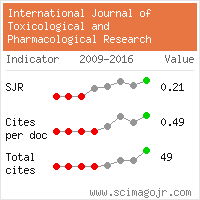
Disclaimer: Scopus, Embase, Publons and Crossref are registered trademark of respective companies.
This journal is member of Crossref.
1. Identifying the Microemulsion Region Through Pseudo-Ternary Phase Diagrams, Development and Characterization of Microemulsions to Enhance Percutaneous Permeation of Terbinafine Hydrochloride.
Lakshyaveer Singh
Abstract
Topical treatment of fungal infections of skin is often limited by the poor percutaneous permeation through human skin. For this reason, the development of topical formulations which are able to improve the percutaneous permeation of antifungal agents is of particular importance for skin conditions. A useful strategy for improving the percutaneous flux is to improve the concentration of drug and to choose the appropriate vehicle for the drug delivery across the skin. Various studies have proved that microemulsion can significantly increase topical and transdermal availability of poorly water soluble drug candidates. Terbinafine is a topically and orally active synthetic allylamine broad spectrum antifungal agent. Shorter courses of terbinafine are needed for the treatment of various fungal and yeast skin infections. Higher effectiveness of terbinafine has the advantage for using it in topical microemulsion. So present study is designed to develop the topical microemulsion of terbinafine hydrochloride.
2. Association Between Vitamin D Levels and Severity of Osteoarthritis.
Manu Bhushan Mengi, Supratik Biswas, Mintu Ghorui
Abstract
Background: Osteoarthritis (OA) is a progressive degenerative joint disorder characterized by cartilage destruction, pain, and functional disability. Vitamin D plays an important role in bone metabolism, cartilage homeostasis, and muscle function. Several studies have suggested an association between vitamin D deficiency and increased severity of osteoarthritis. Objective: To evaluate the association between serum vitamin D levels and severity of osteoarthritis among adult patients. Materials and Methods: A hospital-based cross-sectional study was conducted among 150 patients diagnosed with primary knee osteoarthritis. Serum 25-hydroxyvitamin D [25(OH)D] levels were estimated using chemiluminescent immunoassay. Osteoarthritis severity was graded radiologically using the Kellgren–Lawrence (K-L) classification. Patients were categorized into vitamin D deficient (<20 ng/mL), insufficient (20–29 ng/mL), and sufficient (≥30 ng/mL) groups. Statistical analysis was performed using Chi-square test, ANOVA, and Pearson correlation. A p-value <0.05 was considered statistically significant. Results: The mean age of participants was 58.4 ± 8.7 years. Vitamin D deficiency was observed in 54.7% of patients. Severe OA (K-L Grade III–IV) was significantly more common among vitamin D-deficient individuals (75.6%) compared to sufficient individuals (28.6%) (p<0.001). Serum vitamin D levels demonstrated a significant negative correlation with OA severity score (r = -0.48, p<0.001). Conclusion: Lower serum vitamin D levels were significantly associated with greater radiological severity of osteoarthritis. Screening and correction of vitamin D deficiency may be beneficial in patients with osteoarthritis.
3. Association Between Duration of Diabetes and Severity of Diabetic Reti-nopathy Among Patients with Type 2 Diabetes Mellitus: A Cross-SectionalStudy
Abha Wadhawan, Moparthi Brunda, Priyabrata Mondal
Abstract
Background: Diabetic retinopathy (DR) is one of the most common microvascular complications of diabetes mellitus and remains a leading cause of preventable blindness. Duration of diabetes has been identified as a major risk factor for the development and progression of DR. Objectives: To evaluate the association between duration of diabetes mellitus and severity of diabetic retinopathy among patients with type 2 diabetes mellitus. Methods: A hospital-based cross-sectional study was conducted among 200 patients with type 2 diabetes mellitus attending the ophthalmology outpatient department. Fundus examination was performed after pupillary dilatation and DR was graded according to the Early Treatment Diabetic Retinopathy Study (ETDRS) classification. Patients were categorized based on duration of diabetes into <5 years, 5–10 years, 11–15 years, and >15 years. Chi-square test and Spearman correlation were used for statistical analysis. Results: The prevalence of diabetic retinopathy increased significantly with increasing duration of diabetes (p<0.001). Severe forms of DR, including proliferative diabetic retinopathy, were predominantly observed among patients with diabetes duration exceeding 15 years. A strong positive correlation was observed between duration of diabetes and severity of diabetic retinopathy (Spearman’s rho = 0.68, p<0.001). Conclusion: Longer duration of diabetes mellitus is significantly associated with increased severity of diabetic retinopathy. Early screening and strict glycemic control are essential to prevent progression of visual impairment.
4. Mesh Fixation with N-Hexyl Cyanoacrylate Glue versus Conventional Sutures in Lichtenstein Tension-Free Inguinal Hernioplasty: A Prospective Randomized Comparative Study
Ramesh Kumar R., Gunaseelan P., Ravikumar P.
Abstract
Background: Lichtenstein tension-free mesh hernioplasty remains the gold standard procedure for inguinal hernia repair. Conventionally, polypropylene mesh is fixed using non-absorbable sutures. However, suture fixation may increase tissue trauma, operative duration, postoperative pain, and foreign body reaction. Cyanoacrylate tissue adhesives have emerged as a promising alternative for atraumatic mesh fixation. Aim: To compare the effectiveness and outcomes of N-Hexyl cyanoacrylate glue and conventional polypropylene sutures for mesh fixation in patients undergoing Lichtenstein inguinal hernioplasty. Methods: A prospective randomized comparative study was conducted in the Department of General Surgery, Tertiary Care Teaching Hospital, Tamil Nadu, India, from September 2017 to January 2018. One hundred patients with primary inguinal hernia were randomized into two groups: Glue Group (n=50) and Suture Group (n=50). Patients underwent Lichtenstein tension-free mesh hernioplasty with mesh fixation using either N-Hexyl cyanoacrylate glue or polypropylene sutures. Outcomes assessed included operative time, postoperative pain, seroma formation, wound infection, duration of hospital stay, and recurrence. Statistical analysis was performed using SPSS version 20.0. Continuous variables were analyzed using Student’s t-test and categorical variables using Chi-square test. A p-value <0.05 was considered statistically significant. Results: The mean age of participants was 54.07±16.37 years. All participants were males. Baseline demographic characteristics were comparable between the groups. The glue fixation group demonstrated significantly reduced operative duration, lower postoperative pain scores, reduced seroma formation, and shorter hospital stay compared to the suture fixation group. No significant difference was observed in recurrence rates during the six-month follow-up period. Conclusion: N-Hexyl cyanoacrylate glue is a safe and effective alternative to conventional suture fixation for mesh placement in inguinal hernia repair. Glue fixation offers advantages of reduced operative time, decreased postoperative pain, lower complication rates, and shorter hospitalization while maintaining comparable recurrence rates.
5. Effect of Maternal and Fetal Outcome in Teenage Pregnancy
Ramesh Kumar R., Gunaseelan P., Ravikumar P.
Abstract
Background and Objectives: Teenage pregnancy remains a major global public health issue, particularly in low- and middle-income countries, where early childbearing is associated with significant maternal and fetal complications. Defined as pregnancy occurring in females aged 10-19 years, it has been linked to increased maternal and neonatal morbidities due to biological immaturity, inadequate antenatal care, and socio-economic factors. This study aims to evaluate the maternal and fetal outcomes of teenage pregnancy. Methods: A prospective clinical study was conducted over three months in the Department of Obstetrics and Gynecology at tertiary care hospital in Tamilnadu. A total of 200 antenatal patients aged 13-19 years with singleton pregnancies and a gestational age of 28 weeks and above were included. Data collection involved detailed clinical history, antenatal examination, laboratory investigations, and assessment of maternal and fetal outcomes. Statistical analysis was performed using SPSS version 25.0, with significance set at p < 0.05. Results: Anemia was the most common maternal complication (48.8%), followed by hypertensive disorders (23.3%) and gestational diabetes mellitus (17.7%). Cardiac complications were observed in 4.4% of cases. Preterm delivery was observed in 30% of cases, postpartum hemorrhage (PPH) in 17.7%, and instrumental delivery in 15.5%. Wound infection was the most frequent postpartum complication (31.1%), followed by PPH (26.6%) and postpartum sepsis (18.8%). Psychological issues such as postpartum depression and psychosis were seen in 10% of cases. Neonatal complications included low birth weight (28%), preterm birth (30%), perinatal asphyxia (15%), and NICU admission (20%). Stillbirth was recorded in 5% of cases. Conclusion: Teenage pregnancy is associated with significant maternal and fetal complications, including anaemia, hypertensive disorders, preterm labor, and neonatal morbidity. These findings highlight the need for targeted interventions such as improved antenatal care, increased awareness, and better socio-economic support to mitigate risks associated with adolescent pregnancies.