Ajay Gaur, Ashutosh Sharma
Sunil Kumar, Prashant Beniwal
Sulekha Mandal, Dilip Agrawal


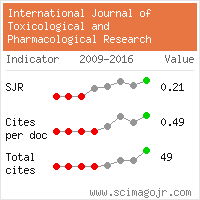
Disclaimer: Scopus, Embase, Publons and Crossref are registered trademark of respective companies.
This journal is member of Crossref.
1. Designing and Evaluation of Taste masked Complex of Temafloxacin
Ajay Gaur, Ashutosh Sharma
Abstract
In pharmaceutical development, the advancement of taste-masking techniques is pivotal in enhancing patient compliance, particularly among pediatric and geriatric populations. The goal is to develop palatable dosage forms while masking the inherent bitterness of active pharmaceutical ingredients (APIs). This study investigates the formulation and evaluation of a drug-resin complex for Temafloxacin, a bitter fluoroquinolone antibiotic, utilizing modern ion-exchange resin technology. Complexation efficacy, drug loading, and in vitro drug release behavior were analyzed to determine the suitability of Amberlite IRP 64 as a taste-masking resin. This approach aligns with current trends in patient-centric drug design and targeted oral delivery systems.
2. Nanostructured Lipid Carriers Incorporated Transdermal Patch for Management of Rheumatoid Arthritis
Sunil Kumar, Prashant Beniwal
Abstract
Nanostructured Lipid Carriers (NLCs) are very potential formulations for topical delivery of anti-inflammatory and anti-arthritic drugs. In the present study NLCs containing methotrexate and aceclofenac were incorporated in transdermal drug delivery system for management of arthritis. The NLCs were prepared by microemulsion technique method with fixed amount of methotrexate (100mg) using cetyl Alcohol, compritol 888 ATO, glyceryl monostearate and were incorporated into ethyl cellulose and polyvinyl pyrrolidone matrix patch prepared by solvent evaporation method. Four NLC loaded transdermal formulations were prepared by changing the concentration of polymer proportion PVP, PVA, and concentration of permeation enhancer DMSO. The prepared transdermal patches were evaluated for thickness (0.80 ± 0.07 -0.85 ± 0.06mm) , weight variation (0.020 ± 0.003- 0.026 ± 0.002g), flatness 98.23±2.11-98.57±1.06%), folding endurance (85-135), and drug content which were found to be 84.26 ± 0.26- 92.80 ± 0.48%. Ex-vivo skin permeation of the prepared formulation was studied on rat skin and the drug release from the optimized patch NLCT4 incorporated with SLNs was found to 96.17 ± 1.28% for methotrexate and 89.23 ± 1.56% for aceclofenac up to 48h. The skin irritation test showed that the prepared transdermal patch were free of skin irritants. Stability studies of the optimized formulation NLCT4 indicated that it remained stable (99.33 ± 0.029% drug content) at 5 ± 1 °C after 45 days. It was concluded that incorporation of methotrexate and aceclofenac in the form of NLCs can improve transdermal permeation for the management of rheumatoid arthritis.
3. Design, Synthesis and Evaluation of Styryl Benzimidazoles Derivatives as Anti-malarial Agents: QSAR, Docking based designing
Sulekha Mandal, Dilip Agrawal
Abstract
Quantitative Structure Activity Relationship (QSAR) and docking studies on a series of 40 analogues of benzimidazoles nucleus were performed. The training set consisting of 32 molecules in CoMFA, CoMSIA and HQSAR models gives cross validated r2 (q2) and (S.E) standard error of 0.613, 0.980 and 0.021 and conventional on MMFF94 q2 0.785, r2 0.942 and (S.E) standard error 0.033 respectively. The predicted r2 values 0.882, 0.788 and 0.867for CoMFA, CoMSIA and HQSAR respectively, shows that generated models are appropriate for further designing. In addition to this work the docking studies was performed on Protein model of Plasmodium falciparum (PDB 2ANL) which is further explore the binding affinity towards active site of protein receptor. The results guide us for the creation of more potent and effective compounds towards strain of Plasmodium falciparum relative to chloroquine. Total 15 styryl benzimidazoles derivatives have been designed, synthesized, characterized and evaluated for their Plasmodium falciparum activity on the basis of QSAR and docking studies. The activity of the synthesized compounds were analysed further to develop CoMFA and CoMSIA models to validate the experimental data.